Buying Property in Naxos: Step by Step Guide for Foreign Buyers
Buying property in Naxos as a foreign buyer is straightforward once you know the order of steps: get a Greek tax number (AFM), appoint an independent lawyer and engineer, check the title and legality, sign a preliminary contract with a deposit, then sign the final deed before a notary and register it. Prices depend heavily on the area, from village houses and plots in the mountains to villas near the west coast beaches. This guide walks through the areas, the trip, the steps and a realistic timeline, from our desk in Naxos Town.
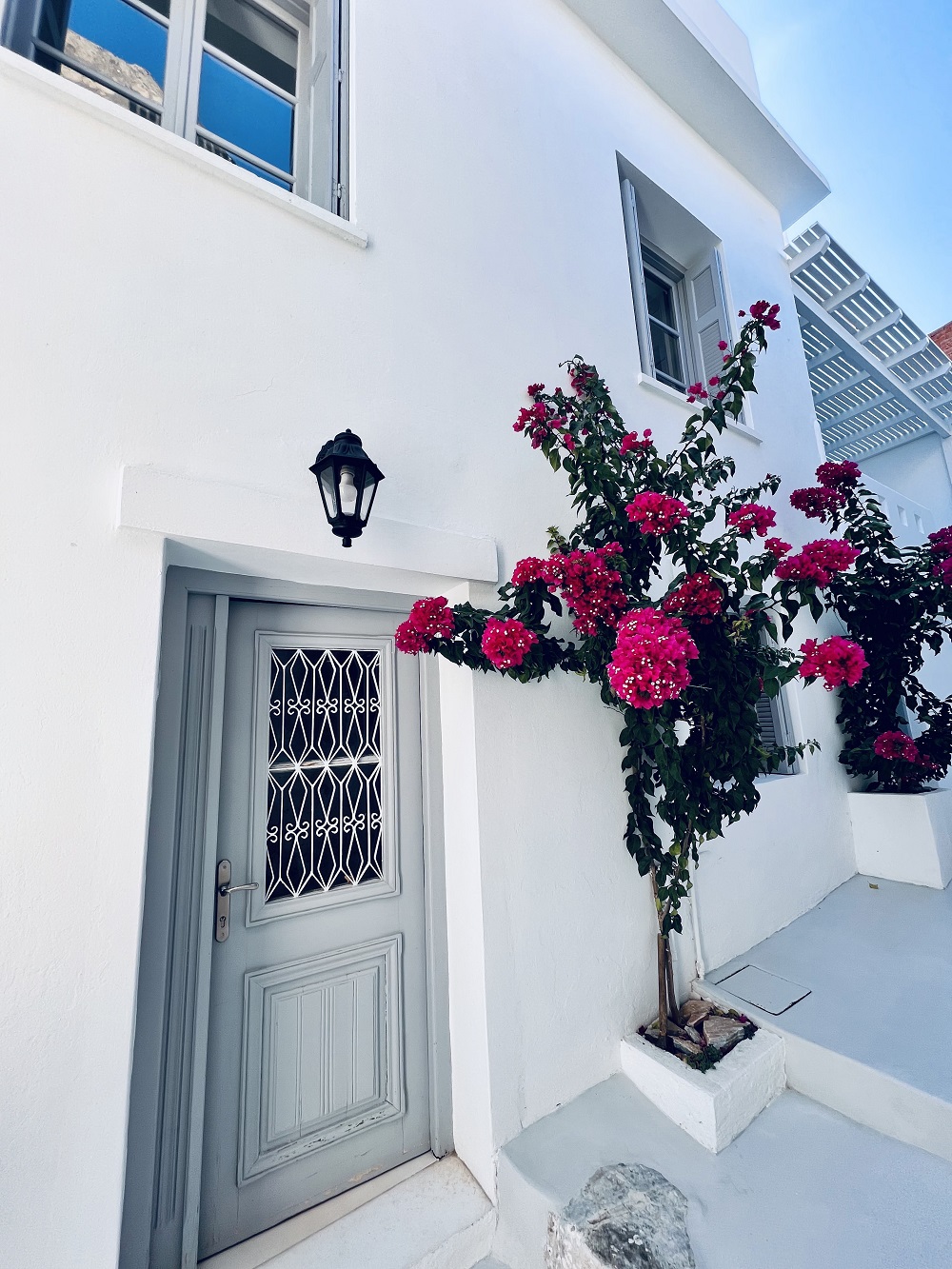
Buying property in Naxos: the main areas and what they cost
Naxos is the largest island of the Cyclades, and it behaves like several small markets rather than one. The figures below are median asking prices in Real Naxos listings, October 2026. They mix houses, plots and land, they are asking prices rather than sale prices, and some areas have only a handful of listings, so read them as a sense of scale, not as a valuation.
| Area | Median asking price (all types) | Listings |
|---|---|---|
| Mikri Vigla | about €620,000 | 6 |
| Plaka | about €570,000 | 13 |
| Naxos Town (Chora) | about €440,000 | 8 |
| Kastraki | about €425,000 | 19 |
| Galanado | about €230,000 | 12 |
| Galini | about €180,000 | 9 |
| Filoti | about €120,000 | 5 |
| Sangri | about €105,000 | 6 |
| Vivlos | about €100,000 | 7 |
West coast beaches: Plaka, Mikri Vigla, Agios Prokopios, Agia Anna, Kastraki
The long sandy coast south of Chora is where most foreign buyers start, and it is the priciest part of the island. Agios Prokopios and Agia Anna are the most built up, with tavernas, shops and easy access to town. Plaka is quieter, with houses in our listings at roughly €4,700 per m² of floor area. Mikri Vigla, known for its wind and a favourite beach for kitesurfing and windsurfing, shows homes at around €4,400 per m². Kastraki has the largest number of our listings and a wider mix, from plots to finished villas. Inland hamlets just behind the coast, such as Agios Arsenios and Glinado, often come in well below the beachfront figures.
Naxos Town (Chora)
Chora suits buyers who want shops, the port, medical services and offices within walking distance all year. Homes in our Chora listings ask about €5,000 per m², among the highest per m² figures in our listings, and the stock is small: apartments and town houses, some inside or near the old Venetian quarter. Expect older buildings where the engineer’s check matters even more.
Inland villages: Filoti, Chalki, Apeiranthos, Sangri, Tripodes and Vivlos, Galini, Melanes
The interior is the affordable side of Naxos. Filoti, Sangri and Vivlos show median asking prices of roughly €100,000 to €120,000, and Galini around €180,000. Chalki, Apeiranthos and Melanes are traditional villages with stone houses and a strong local character; we list fewer properties there, so prices move case by case. Many village properties need renovation, and many affordable listings are plots or agricultural land rather than houses: of the 24 listings at or under €100,000 across the island, only one is a house.
East and south coast: Moutsouna and Pyrgaki
Moutsouna, on the east coast, is a small harbour with a quiet, remote feel. Pyrgaki, on the south coast, is far from town and much less built up than the beaches closer to Chora. Both appeal to buyers who want space and calm more than convenience. We have few listings in these areas, so we discuss them one by one rather than quote a typical price.
Getting to Naxos for a viewing trip
Naxos has a small airport just outside Chora, near Agios Prokopios. Most buyers coming from abroad fly into Athens and connect: flights between Athens and Naxos run all year and take about 45 minutes. By sea, ferries from Piraeus sail every day in season and the route runs all year round. Crossing times depend on the boat, from about three hours on high speed vessels to considerably longer on conventional ferries. In season there are also sailings from Rafina, the port closest to Athens airport. Schedules change by season, so check them close to your dates.
Planning a viewing trip
A well prepared trip saves money and time. What works best for our clients:
- Shortlist before you fly. Send us your budget, the type of property and two or three areas. We prepare a shortlist with documents we already hold, so you do not spend a day on a house with obvious problems.
- Allow several days. The island is large and village roads are slow. Group viewings by area: west coast one day, villages another.
- Visit out of season if you can. Spring and autumn show you how an area lives when visitors leave, which matters if you plan long stays.
- Check practical points on site. Road access, water supply, electricity connection, mobile signal, distance to the nearest shop and to Chora.
- Use the trip for paperwork. Meeting a lawyer and opening a bank account while you are on the island can save a second trip.
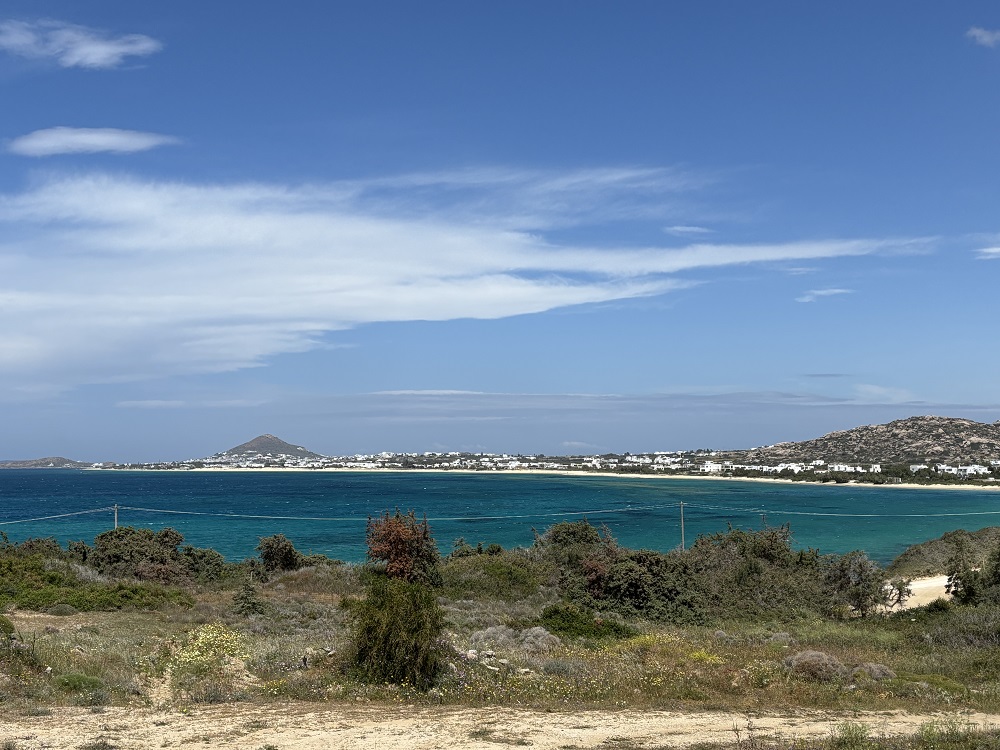
Step by step: the purchase process
Here is the sequence in brief. Our purchase procedure page explains each document, and our guide to buying a house in Greece covers costs and common pitfalls in more detail.
- Greek tax number (AFM). Every buyer needs one. Residents abroad can apply online through the myAADE portal of the Greek tax authority, and foreign public documents must carry an Apostille (or consular certification) and an official Greek translation. Depending on your situation you may also need to appoint a tax representative in Greece; your lawyer will advise you.
- Greek bank account. Most buyers open one: it keeps the payment trail clear and is useful later for utilities and local taxes. Your lawyer will confirm how the price should be paid.
- Independent lawyer. Your lawyer checks the title, encumbrances and the seller’s right to sell, drafts or reviews the contracts and can act for you with a power of attorney.
- Engineer’s legality check. Greek law requires an engineer’s certificate and a declaration by the owner for every transfer, confirming that there are no illegal constructions or that any fall within the legal exceptions. Where required it comes with a topographic diagram, and it is valid for two months, so it is issued close to signing. Ask your own engineer to review it, and see our guide to buying land in Greece if you are looking at a plot.
- Cadastre check. The lawyer checks the property’s record at the Hellenic Cadastre (Ktimatologio) and that boundaries and areas match the documents.
- Preliminary contract and deposit. Once checks are under way, buyer and seller agree the price, timetable and conditions. Under the Greek Civil Code, a preliminary contract for real estate takes the same notarial form as the final sale, and the deposit amount is agreed between the parties.
- Notary deed. The sale itself must be signed before a notary. The notary opens the digital transfer file on the state platform akinita.gov.gr, which collects documents from the tax authority, the Cadastre and other services, and the transfer tax and fees are paid electronically.
- Registration. The deed is registered with the Cadastre, which completes the transfer of ownership. For a property already recorded in the Cadastre, the digital platform allows registration in about one business day when there are no outstanding issues.
A realistic timeline
For a property with clean papers, plan for a few months from accepted offer to deed, not a few weeks. The AFM and bank account can be handled early, often before you have chosen a property. The legal and technical checks take the longest, especially for older village houses, inherited properties with several owners, or buildings with additions that need to be legalised first. Once the file is complete, the notary stage itself moves fast. If you cannot return for the signing, your lawyer can sign for you with a power of attorney, which many of our buyers living abroad choose.
How a local agency helps
Our role is to make the local part simple. We know which areas match your budget and way of life, we gather the documents a seller should have before you travel, and we organise viewings so that a few days on the island are enough. During the purchase we coordinate with your lawyer, engineer and notary, translate between parties when needed, and follow up until the deed is registered. After the purchase we can recommend local contractors and help with utility connections. You can browse current properties for sale, or go straight to houses or building plots.
Frequently asked questions
Can foreigners buy property in Naxos?
Yes. EU and non EU citizens can buy property on Naxos. Every buyer needs a Greek tax number, and your lawyer confirms whether any special permit applies to your case before you commit.
How long does it take to buy property in Naxos?
For a property with complete documents, a few months from accepted offer to registered deed is a sensible planning assumption. Legalisation of older constructions, inheritance issues or Cadastre corrections add time.
Do I need to be in Greece to complete the purchase?
No. Many buyers visit for viewings and then give a power of attorney to their lawyer, who signs the preliminary contract and the deed on their behalf. Documents issued abroad need an Apostille and an official Greek translation.
Where is property cheapest on Naxos?
In our October 2026 listings, inland villages such as Vivlos, Sangri, Filoti and Galini have the lowest median asking prices, while Mikri Vigla, Plaka, Chora and Kastraki are the most expensive.
If you are thinking about buying property in Naxos, tell us what you are looking for through our contact page. We are happy to answer questions before you plan a trip, with no obligation.